Instant Connect

Scan to connect via WhatsApp or WeChat
The right organoclay grade is the one that develops the required rheology in your actual continuous phase, with the mixing equipment and addition process available at your plant. Start by identifying whether the system is water- or oil/solvent-continuous. Then match the grade to the application, solvent or base-oil polarity, activation method, clarity requirement and target rheology. Confirm the final choice with a controlled bench test; there is no single organoclay grade that is best for every formulation.
Last reviewed: July 16, 2026 · CAMP-SHINNING technical content
If you already know your formulation details, use the CAMP-SHINNING Organoclay Product Finder or send them to our technical support team for a CP grade shortlist.
| Selection question | Why it matters | What to record |
|---|---|---|
| What is the continuous phase? | A standard solvent-based organoclay will not perform the same way in an aqueous phase. | Water, solvent blend, mineral oil, synthetic oil or mixed phase |
| What is the application? | Coatings, drilling fluids, greases, inks, adhesives and cosmetics use different performance criteria. | End use, resin or binder, pigments/fillers and processing method |
| What is the polarity of the full liquid phase? | Polarity controls wetting, swelling and platelet exfoliation. | Every solvent/base oil and its percentage |
| Is a polar activator acceptable? | Conventional grades may need an activator; other grades simplify direct addition or post-correction. | Activator restrictions, VOC limits and addition sequence |
| What mixing energy is available? | Incomplete dispersion can make a suitable grade appear ineffective. | Mixer type, blade, speed, time, temperature and batch size |
| What must the organoclay deliver? | Maximum viscosity alone may harm flow, leveling, pumping or extrusion. | Low-shear viscosity, yield value, thixotropic recovery, anti-settling, anti-sag and clarity |
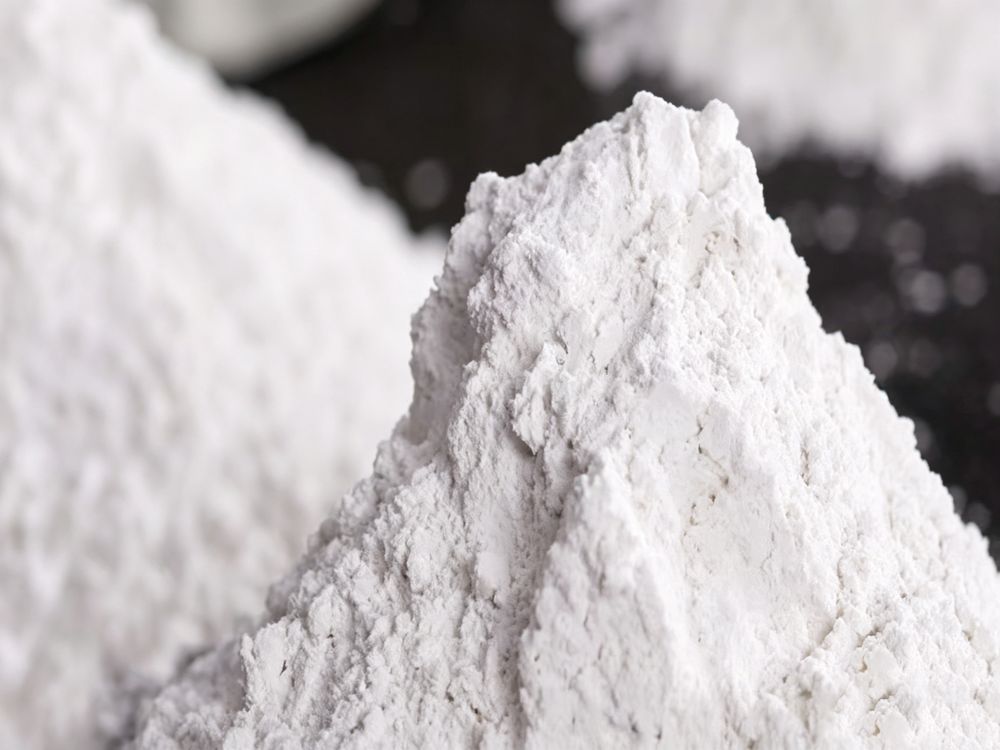
Organoclay is an organically modified layered clay, usually based on montmorillonite, that can swell and form a thixotropic network in compatible liquids. Different organic modification levels, particle characteristics and processing designs create different organoclay types. These differences affect:
The selection goal is not simply to produce the highest viscosity. It is to build the required structure at rest while preserving flow during spraying, pumping, printing, mixing or extrusion. See how organoclay forms a thixotropic network for the underlying mechanism.
The first decision is whether the formulation is water-continuous or organic/oil-continuous.
Use a solvent-based organoclay when the continuous phase is an organic solvent, mineral oil, synthetic oil or similar non-aqueous liquid. This category includes many solvent-borne coatings, printing inks, sealants, lubricating greases and oil-based drilling fluids.
Use a purpose-designed water-based organoclay when water is the continuous phase. Do not assume that a solvent-based CP grade can be transferred directly into a waterborne formulation. CAMP-SHINNING water-dispersible options include CP-EW, CP-EWS and CP-WBS, but the correct candidate still depends on the application and required viscosity profile.
For emulsions, identify which phase is continuous at the stage where the organoclay must work. Also record co-solvents, surfactants and the order of addition. A formulation described as “water-based” may still contain an oil phase where a separate suspension mechanism is needed; an oil-continuous emulsion must not be selected as if it were a simple mineral-oil system.
Application determines what “good performance” means. Use the following table to choose the correct selection branch before comparing CP products.
| Application | Primary selection targets | CAMP-SHINNING route |
|---|---|---|
| Paints and coatings | Anti-settling, anti-sag, application flow, leveling, storage stability and sometimes clarity | Start with the organoclay for paints and coatings guide |
| Printing inks | Pigment suspension, body, print transfer, mist control and fine dispersion | Review organoclay for printing inks |
| Adhesives and sealants | Non-sag extrusion, bead shape, pumpability and storage stability | Review organoclay for adhesives and sealants |
| Oil-based drilling fluids | Yield point, gel strength, cuttings transport, weighting-material suspension and base-fluid compatibility | Use the oil-based drilling fluid selection guide |
| Lubricating greases | Base-oil compatibility, target consistency, mechanical stability and processing route | Use the organoclay grease guide |
| Cosmetics and personal care | Oil/silicone/ester compatibility, pigment suspension, texture, purity and sensory fineness | Review organoclay for cosmetics |
A grade that works in a xylene-based industrial coating is not automatically the correct choice for a synthetic-base drilling fluid or an ester-rich cosmetic product. Application pages provide the detailed evaluation criteria; this guide provides the cross-application selection logic.
Organoclay solvent polarity is a compatibility window, not a single universal number. A practical first screen is:
| Liquid-phase profile | Typical formulation examples | Selection direction |
|---|---|---|
| Non-polar to low polarity | Mineral oil, aliphatic hydrocarbon, mineral spirits and some base oils | Screen grades designed for low-polarity wetting and gel development; verify whether activation is required |
| Intermediate polarity | Aromatic/aliphatic blends, xylene- or toluene-containing systems and many industrial resin solutions | Compare general-purpose and easy-dispersing CP grades under the real resin/solvent ratio |
| Medium to high polarity | Ketones, esters, ether esters, alcohol-containing blends and higher-polarity resin systems | Screen grades designed for moderate/high polarity or grades that do not require an external activator in the intended medium |
| Broad or uncertain polarity | Multi-solvent formulations, recycled solvent streams or changing resin packages | Begin with wide-range candidates, then run a structured comparison rather than relying on a solvent name |
Do not select from the major solvent alone. Resin solids, plasticizers, oils, surfactants, wetting agents, pigments and other additives can change how the clay surface is wetted and how the network develops. Two formulations that both contain xylene may require different grades if their resin, co-solvents and pigment packages differ.
For mixed solvents, list every liquid component and percentage. If the composition varies by production batch, test the candidate grades at both ends of the expected composition range.
The correct product must fit the plant process as well as the chemistry.
Conventional grades are normally selected when the plant can provide controlled high shear, a defined addition sequence and, where required, a suitable polar activator or pre-gel process. They can be strong candidates when maximum gel development and a repeatable dedicated dispersion stage are priorities.
Easy-dispersing grades simplify incorporation and may allow direct powder addition or later viscosity correction, depending on the individual TDS and formulation. CAMP-SHINNING CP-10 and CP-10A are easy-to-use grades for non-polar to medium-polar systems; CP-100 is an economical easy-dispersing option in a similar polarity range. These are candidate directions—not automatic substitutions for one another.
When an external activator is undesirable, screen products whose TDS confirms activator-free use in the relevant polarity range. Examples include CP-APA for moderate- to high-polarity systems and CP-MP10 across a broad solvent range. CP-MP can eliminate a polar activator in medium- and high-polarity solvents. The result must still be confirmed in the full formulation.
Transparent coatings, clear gels, high-quality inks and some cosmetic products need more than viscosity. Screen fine-dispersion candidates such as CP-MP, CP-MPS and CP-EDS when clarity, color and surface smoothness are important. CP-EZ10 is an easy-dispersing candidate for low- to medium-polarity systems where anti-sag, anti-settling and transparency are required; its TDS calls for a small amount of activator, so it should not be treated as universally activator-free.
If a grade is not fully wetted, swollen and exfoliated, the result may be low viscosity, poor suspension, haze or unstable rheology. Record the actual disperser, blade diameter, vessel geometry, batch volume, speed, time, temperature and addition order. “High shear” is not a reproducible test condition unless the equipment and process are defined.
This matrix is designed to create a laboratory shortlist. It is not a one-to-one substitution chart and does not replace the current product TDS.
| Formulation need | CP candidates to screen | TDS-based reason to include them |
|---|---|---|
| Easy incorporation in non-polar to medium-polar solvent systems | CP-10, CP-10A, CP-100 | Easy-to-use/easy-dispersing options intended for general coatings, inks, adhesives or related systems |
| Intermediate- to low-polarity systems requiring suspension and sag control | CP-180B, CP-EL, CP-GL | Designed for intermediate/low-polarity organic liquids; relevant where clarity, suspension and thixotropic consistency are required |
| General solvent systems from low to medium-high polarity | CP-34, CP-40 | General-purpose candidates for coatings, inks, sealants, grease and other solvent/oil systems; confirm activation route in the current TDS |
| Moderate- to high-polarity formulations | CP-APA, CP-EDS, CP-MP | Designed for higher-polarity solvent/resin systems; CP-APA and CP-MP have defined activator-reduction or elimination benefits in suitable media |
| Wide polarity range or complex mixed-solvent formulations | CP-388, CP-MPS, CP-MPZ, CP-MP10 | Broad solvent/resin compatibility makes them useful starting candidates when the liquid phase is complex |
| High clarity or fine dispersion | CP-MP, CP-MPS, CP-EDS, CP-EZ10 | Fine-dispersion candidates for transparent coatings, inks, cosmetics or applications sensitive to haze and texture |
| Water-continuous formulations | CP-EW, CP-EWS, CP-WBS | Dedicated water-dispersible product family; select by required aqueous viscosity and application |
| Oil-based drilling fluids | CP-982, CP-992 and other drilling-specific CP grades | Dedicated drilling-fluid candidates; shortlist by base fluid, temperature, mud system and target rheology |
| Lubricating grease | CP-250A and other grease-specific CP grades | Select by mineral, synthetic or vegetable base oil, processing route and target consistency |
The product names above are CAMP-SHINNING CP grades only. Always use the latest TDS for product-specific polarity, activation, addition and specification claims.
Write a test target before requesting samples. “We need more viscosity” is not enough, because a formulation can gain high-shear viscosity and still have poor suspension at rest.
Depending on the application, define:
The best grade is the one that meets the complete performance window at a practical use level—not necessarily the grade that gives the highest single viscosity reading.
Use a controlled bench test so grade chemistry is the only major variable.
For a supplier comparison or replacement project, compare all candidates in your own base formulation rather than assuming equivalent product names will perform at the same addition level.
“Organoclay for paint” is too broad. A mineral-spirit alkyd primer, an ester-rich coating and a clear wood finish have different polarity, activation and clarity requirements.
Resins, wetting agents, surfactants and pigments can compete for the clay surface or alter wetting. Evaluate the complete formulation, not an isolated solvent gel only.
Record the full blend and test normal production variation. A small high-polarity component can change activation behavior.
A test is not meaningful if one candidate receives more shear, a different activator level or a different addition sequence without documentation.
Excessive structure can reduce leveling, sprayability, pumpability or ink transfer. Evaluate the whole rheological profile.
Use the dedicated water-based product family unless laboratory work confirms another route.
The same mixer speed does not guarantee the same dispersion energy in a larger vessel. Reconfirm the process during pilot and production scale-up.
Send the following information through the contact form so the recommendation can be based on your formulation rather than a generic product list:
With these details, CAMP-SHINNING can recommend a short list, provide the relevant documents and arrange samples for testing. A final grade recommendation should always be confirmed by the customer’s formulation test.
Use the Product Finder for an initial selection, or send your formulation details to CAMP-SHINNING. We can narrow the CP options according to your continuous phase, solvent or base oil, application, processing route and target performance, then provide the relevant TDS/SDS and samples for validation.
Send us your continuous phase, solvent or base-oil composition, application, process conditions and target rheology.
We reply within 24 hours on business days.
Thank you! Your inquiry has been received.
We'll get back to you within 24 hours.
WeChat ID
0086-13185071071